
.svg)


Avigayil Spinner is a gynecology and obstetrics resident at Hadassah hospitals, so when her own obstetrician sat her down for what she thought was a routine discussion of her ultrasound in the final weeks of her pregnancy, she thought she knew what to expect. Until then, her third pregnancy, like her first two, had gone smoothly.
“There’s a problem,” the doctor said. The baby boy she was carrying seemed to have a blockage in his urinary tract called hydroureteronephrosis. Most mild to moderate cases resolve on their own. But a severe obstruction might require surgical intervention to prevent long-term kidney damage or even renal failure.
From that moment, Avigayil and her husband, Daniel, also a physician, were, of course, worried but hopeful that the problem would right itself.
At two weeks, their baby, born at Hadassah Hospital Ein Kerem, whom they named Aner, underwent an ultrasound. He was developing nicely, and his condition seemed to be improving. But at three months of age, there was a dramatic turnaround. The tube was blocked, and his kidney was swelling. With no surgery, Aner would lose his kidney.
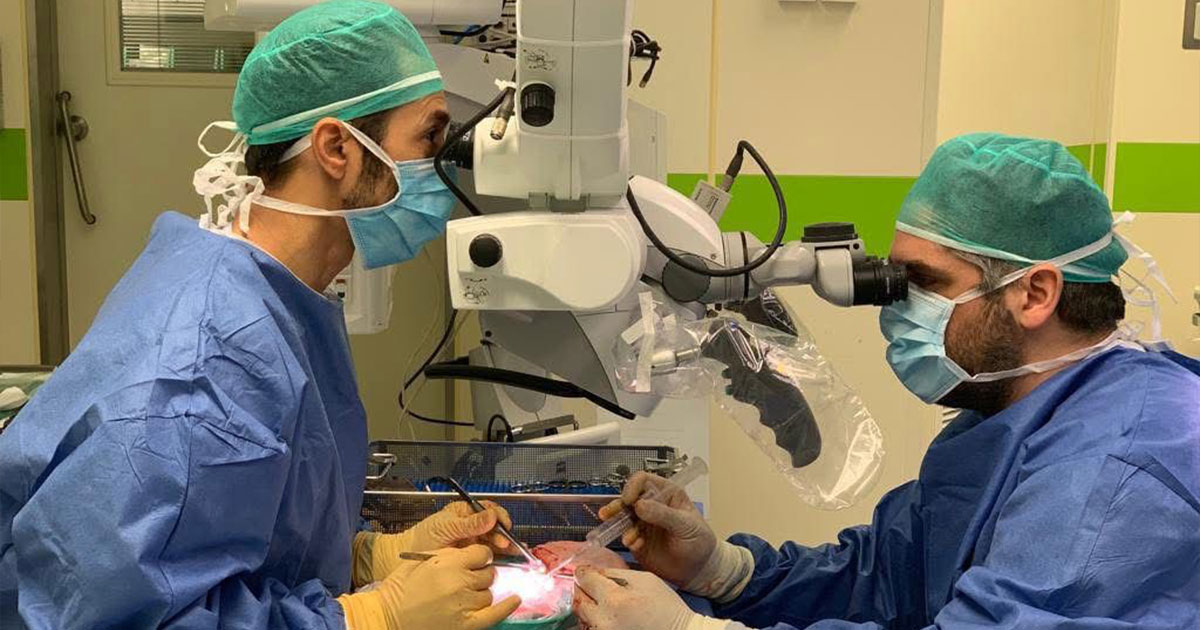
Fortunately, Dr. Guy Hidas, director of the Pediatric Urology Unit at Hadassah Ein Kerem and chair of the Israeli Pediatric Urology Society, is a specialist in exactly such cases. The unit he heads is among the leading in the country for treatment of congenital abnormalities of the urinary and genital tracts, with over 95 percent surgical success rates.
Little Aner would need an urgent surgery to alleviate the pressure from his kidney when he was five months old.
“We’re doctors, and we understand what has to be done,” said Avigayil. “Nonetheless, we were scared parents. With immense care and sensitivity, Dr. Hidas supported us through our baby’s journey to allay our fears. He was not only concerned with what was best for the child but also what was best for his fretting parents.”
The surgery took a few hours, with Aner's parents waiting in the family room in the underground surgery rooms of the Sarah Wetsman Davidson Hospital Tower. Then surgeon Dr. Hidas reappeared. He was smiling.
“There is no greater joy than telling parents their child is well after a successful surgery,” said Dr. Hidas.
“Dr. Hidas is an angel. He saved our son’s kidney,” Avigayil said.
Now laughing and smiling, Aner is recovering from surgery.
“We feel a special connection to Hadassah, because the women in my husband’s family are all multi-generation life members of Hadassah, The Women’s Zionist Organization of America,” said Avigayil. “Aunt Libby Weingarden was vice president of Hadassah’s Metropolitan Detroit Chapter. All the good done by generations ultimately came back to our little Aner. The surgery was in the Sarah Wetsman Davidson Hospital Tower, and Sarah Wetsman Davidson was also a leader of the Detroit Chapter. The guiding principle of these women was helping, giving, caring and compassion.”
Dr. Hidas, 51, has been working at Hadassah hospitals for 20 years, before which he completed his sub-specialization at the University of California Irvine and Children’s Hospital of Orange County, under the mentorship of Dr. Antoine “Tony” Khoury, a world-renowned specialist in the field. He has been at the helm of the pediatric urology unit — staffed by four doctors, two nurses and a psychologist — for 10 years.
“It’s not just about urology,” he said. “My aim is that after a surgery, the child is healthy, and neither he nor his parents suffer from emotional trauma. This is the uniqueness of our unit.”
Undergoing urological surgeries can cause severe psychological strain for children but also for young parents of babies who must undergo such complex procedures. Parents and children may suffer from pediatric medical traumatic stress (PMTS), a condition that manifests itself through difficulty sleeping, behavioral problems and fear of doctors, among other symptoms.
“The way to help alleviate the psychological strain is to show the parents that we are with them and that their child is as important to me as he is to them,” Dr. Hidas said. “We want to give them hope and security.”
Every parent of a child who undergoes surgery in his unit receives his cell phone number.
His unit also offers psychological intervention. Together with Dr. Amichai Ben Ari, a rehabilitation psychologist and expert in acute trauma at Hadassah hospitals, and Ronny Berger Raanan, a clinical psychologist and a doctoral student under the supervision of Dr. Ben Ari, the unit is also carrying out research aimed at providing preventive intervention to parents and examining how it can help psychological recovery in their children. The research is groundbreaking in that it offers preventive action prior to the surgery and before the PMTS symptoms manifest themselves, enabling the growth of emotional resilience and preventing the development of PMTS.
This February, an expanded specialized Pediatric Nephrology-Urology Center opened at Hadassah Ein Kerem. A first in Israel, it was established with Dr. Oded Volovelsky, director of the Pediatric Nephrology Unit. Dr. Hidas and Dr. Volovelsky will co-direct the center.
“There's a synergy between urology and nephrology,” Dr. Hidas said. The center offers comprehensive medical care for kidney and urinary tract diseases, focusing on both the diagnosis and treatment of kidney diseases and specialized surgical and medical interventions for urinary tract issues. Clinical dietitians play an important role, specializing in renal nutrition.
Not everyone realizes that children can also suffer from kidney stones and urinary stones. Pediatric urologist Dr. Leonid Boyarski is the only doctor in the country with a double subspecialty for stone treatment and pediatric urology. He heads a Pediatric Stone Clinic with nephrologists and a dietitian for the treatment of stones in infants and children from all over the country.
Dr. Boyarski will also be heading a unique Pediatric Functional Urology Clinic that deals with children’s urinary incontinence during the day or night. It is a common condition among children and impacts them emotionally, hurting their quality of life, self-esteem and confidence.
“Dr. Hidas is the engine that drives these changes,” Dr. Boyarski said. “He is a virtuoso in how to speak with families, how to listen to the parents and how to be with the children, and we are all learning from him skills that aren’t taught in textbooks.”
Meet Dr. Hidas:
Dr. Guy Hidas completed his residency in general urology at the Hadassah Medical Organization. He further specialized in pediatric urology in the United States, including a fellowship at the University of California, and earned an MS in biomedical and translational science from its School of Medicine. Dr. Hidas is married to Ariela, a pediatric dentist. The couple has three children aged 23, 19, and 17.
Meet Dr. Avigayil Spinner:
A born-and-raised Jerusalemite, Avigayil met her husband, Daniel, in the Tatra mountains in Slovakia, when she visited the university before studying medicine. In addition to Aner, she has two young daughters. A resident in obstetrics and gynecology at Hadassah Ein Kerem, she chose the field out of a great sense of mission. For her, it is a profession that brings together moments of hope and miracles, birth and new life.