
.svg)


"Outside, there may be conflicts and wars, but inside these walls is a small microcosm, disconnected from the outer world, that concentrates on humanity."
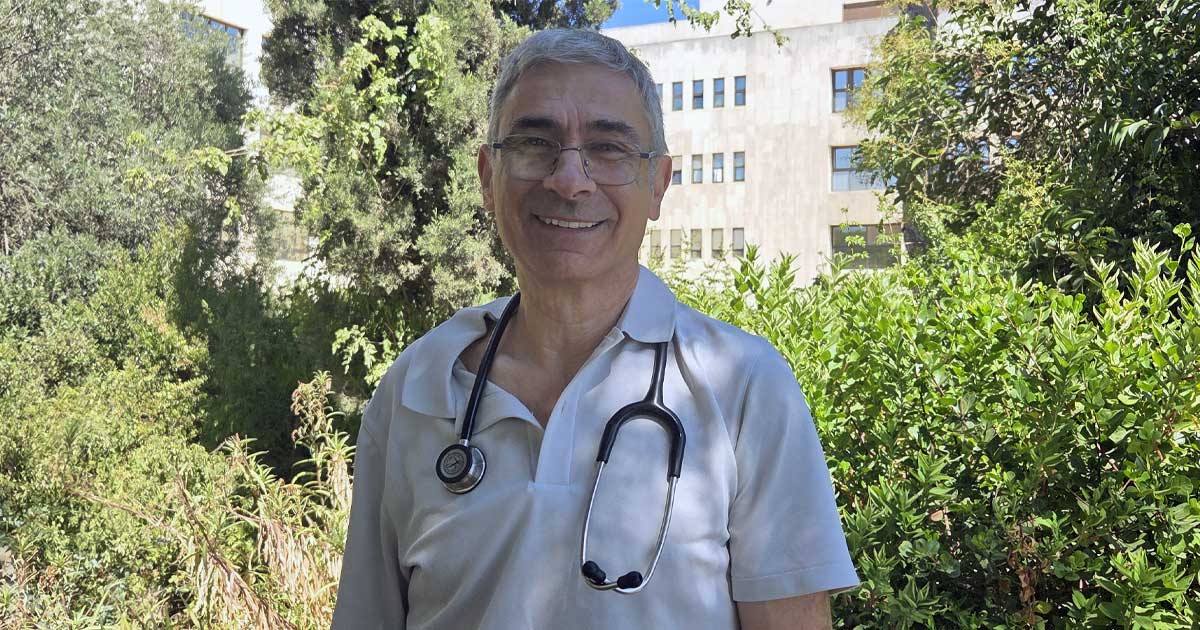
This is how Dr. Daniel Azoulay described the Ina and Jack Kay Hospice at Hadassah Hospital Mount Scopus. A hospice is a place for men and women with terminal illnesses and very short life expectancy. It’s a place to die with dignity and comfort.
This October, the hospice is marking 40 years since its founding by Dr. Reuven Fink and nurse Ruth Shahal-Gassner. In the quiet place Dr. Azoulay describes, the staff provides end-of-life palliative care to some 220 patients every year.
"There's a closeness here among Jews and Muslims, religious and secular people. At the end of life, everyone is the same — everybody asks that their suffering be alleviated and battles the same anxieties and fears," said Dr. Azoulay, who is head of palliative service and responsible for the Hospice Department.
The hospice building was once the home of the Hadassah Medical Organization's director general, Dr. Chaim Yassky, who was killed in the 1948 attack on the Hadassah medical convoy. The interdisciplinary staff includes a chaplain, physicians, nurses, volunteers, a reflexologist, a physiotherapist, residents in geriatrics and palliative care and a canine-assisted therapist.
"Before talking about treatment, the staff gets to know the patient — who they are, what they've achieved and what defines them — instead of focusing on their illness," said Dr. Azoulay.
Each patient's family is given a personal space to be with their loved ones 24/7, even to eat and sleep. "Families also have a voice in making the medical decisions," Dr. Azoulay said. "They know the patient best. There isn't much time left, and we must give the family back quality time they deserve. At the same time, ultimately what counts most is the patient's wish," he explained. "Our purpose is to alleviate the patient's suffering while listening to them and their families."
Listening also means answering their questions on approaching death and saying goodbye. "We may not have the answers, but we have to be ready for the hardest questions. It's imperative that the patients know they haven't lost their identity, even in their present circumstances. We try to find every possible way to bring meaning into this time of the patients' lives. The patient may have little time to live, but we must fill that time with life."
Once a month, volunteers set up a coffee shop in the garden with beverages and cakes of choice and play music. "Music penetrates better than morphine. The connection to music can sometime replace words. When the music plays, we see exhausted patients suddenly wake up," Dr. Azoulay said. "Life remains in us for much longer than is often apparent.”
For Dr. Azulay, 65, helping others was instilled in him from childhood. "My mother always did everything for anyone who needed help and showed us the way. We learned from a young age that giving to others ultimately does good to us too."
Dr. Azoulay studied medicine at Rangueil University Hospital in Toulouse, his native city in southern France. He made aliyah to Jerusalem at the age of 26, working in internal intensive care, emergency medicine, geriatrics and eventually palliative care.
"I really liked intensive care and the ER," he said. "The hospice is seemingly at the other end of intensive care, but palliative care is actually end-of-life intensive care and intensive care to ease of suffering." He’s been working at the hospice for 30 years.
One of the moments that stayed with him most throughout his long career was the passing of a young woman who had to say goodbye to both her children and parents. "The suffering of a mother who says goodbye is one of the hardest things to bear. These are the things that stay with you long-term," he said.
To disconnect from his work, the father of six spends time with his wife, children and grandchildren. "It gives me a lot of vitality," he said. He enjoys running, swimming and playing the bass flute, sometimes joining the coffee shop musicians in the hospice.
"I have the privilege of working at the hospice. It's a very special place."