
.svg)


October is Breast Cancer Awareness Month. We’re spotlighting the groundbreaking work at Hadassah hospitals to fight and treat the disease.
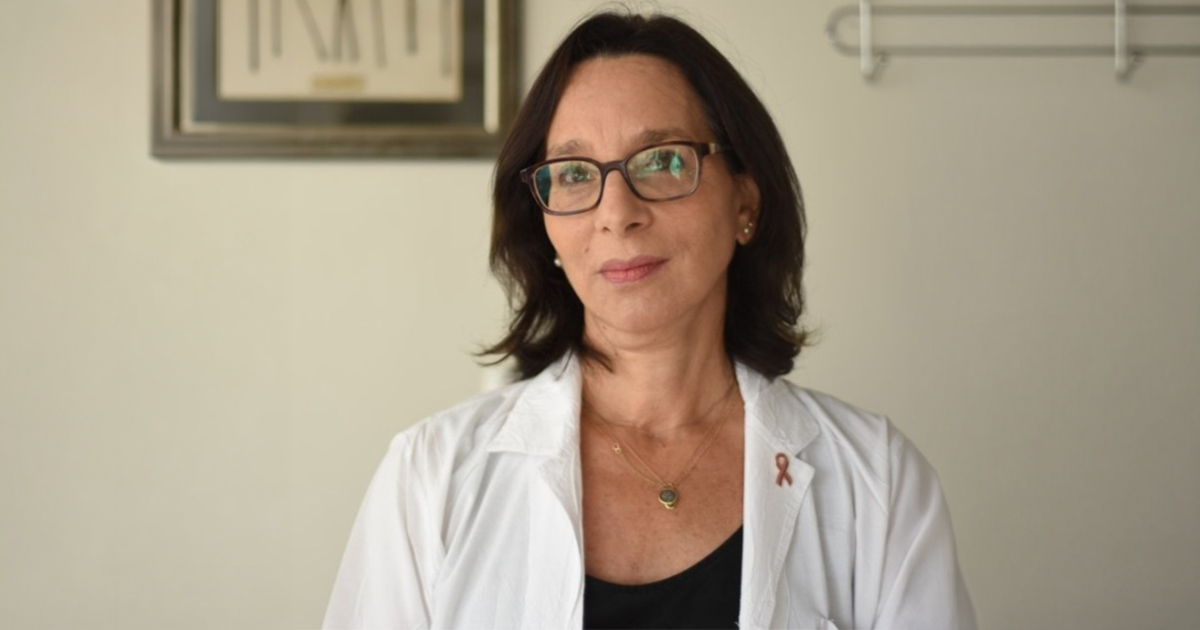
When her longtime interest in personalized breast cancer screening drew her to a short-term sabbatical at the Massachusetts Institute of Technology (MIT), Dr. Tanir Allweis returned to the Hadassah Medical Organization (HMO) poised to help transform breast cancer risk assessment in Israel.
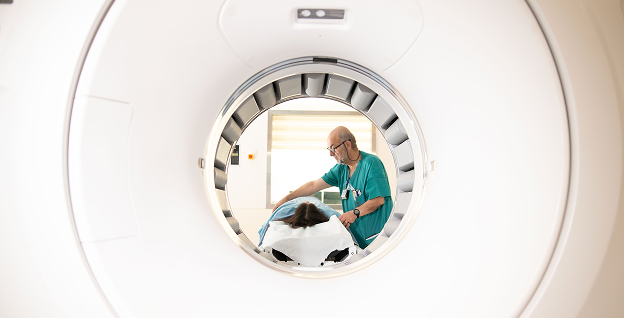
“Israel is definitely one of the first adopters, and Hadassah is at the forefront of what's about to be adopted in Israel,” said Dr. Allweis, head of the Breast Health Center for Excellence at Hadassah Hospital Ein Kerem, of Mirai, a machine learning model that analyzes pixels and patterns in mammograms to predict the risk of breast cancer within five years.
This month, HMO will begin implementing Mirai, initially in a research capacity (not as a full screening program).
“It's an entirely new way of looking at a mammogram. It sees things the human eye cannot discern,” said Dr. Allweis, who also chairs the Israel Society for Breast Surgery.
The tool was created about 10 years ago by Prof. Regina Barzilay, AI faculty lead at the MIT Jameel Clinic, who was diagnosed with breast cancer in her mid-40s despite having no family history of the disease. After completing her treatment, Prof. Barzilay partnered with Boston’s Massachusetts General Hospital, examining tens of thousands of mammograms from women with and without breast cancer, going back as far as five years, and then training the AI model to identify women who are at increased risk. Dr. Allweis spent three months in Prof. Barzilay’s lab last year exploring how to incorporate Mirai into Israel’s screening program.
The aim of Mirai is to shift from traditional age-based, one-size-fits-all screening schedules to tailored screening based on individual risk, thereby avoiding unnecessary screening for those at low risk and recommending more frequent monitoring, including with MRIs, for high-risk women.
While the screening program in Israel is well established, all women are treated the same, according to Dr. Allweis. “It really doesn't make sense because women vary significantly in their risk of developing breast cancer…. It doesn't make sense to start mammograms at the age of 50 in Israel when we know that a full quarter of newly diagnosed breast cancer patients are under the age of 50.”
As part of HMO’s research implementation, Mirai will be tested on its performance in Hadassah hospitals’ patient population to determine whether it can detect an increase in risk in BRCA mutation carriers within a couple of years before diagnosis, and it will study how patients perceive Mirai-based risk assessment.
“I’m very proud to be one of the first centers to actually start implementing it,” she said.
In addition to bringing Mirai to Hadassah hospitals, Dr. Allweis connected Prof. Barzilay with Clalit Health Services, the largest health maintenance organization in Israel, which is now working toward integrating it into routine screening practice.
360 Degrees of Care
Mirai is just one of the many clinical innovations in Hadassah’s breast cancer care repertoire.
According to the Israel Central Bureau of Statistics, about 600 people are newly diagnosed with breast cancer each year in the Jerusalem area. Hadassah Ein Kerem and Hadassah Hospital Mount Scopus treat about 500 breast cancer patients annually; surgery is performed in the operating rooms, and chemotherapy is delivered at the oncology day care center, but initial diagnoses, evaluations and treatment planning are handled at the multidisciplinary breast center. In addition, breast clinics were opened in new outposts in Beit Shemesh and Netivot, increasing the number of women served.
Dr. Allweis added that about 20 percent of the patients come from outside the Jerusalem area because of the prestige of Hadassah hospitals.
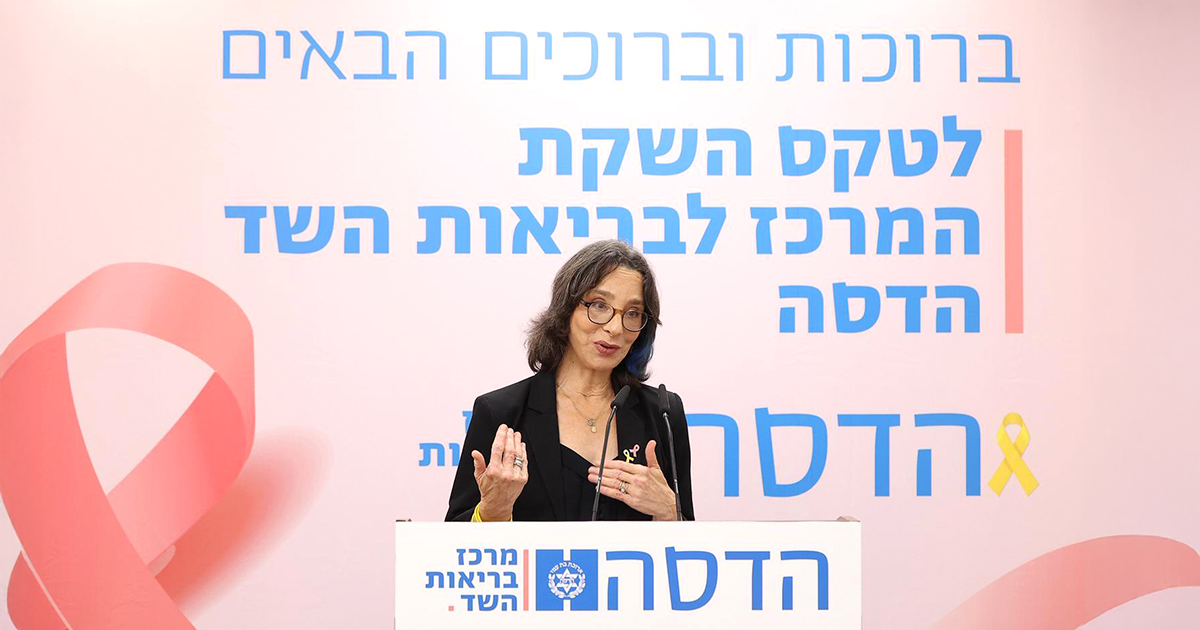
At Hadassah Ein Kerem, the Breast Health Center for Excellence, opened in September 2025, provides a one-stop shop for evaluating women with breast-related findings or concerns, offering imaging, counseling and diagnostic procedures, such as biopsies, as well as outpatient clinics. While breast cancer care was comprehensive prior to the opening of this center, services were offered at different locations within the hospital.
“We offer 360 degrees of care,” Dr. Allweis said. And the scope of this care continuously grows.
Over the years, new specialties have been incorporated, including endocrinology to manage treatment of side effects such as osteoporosis and gynecology for breast cancer survivors to manage side effects from medications. The center recently welcomed back Dr. Yael Wygoda, an oncologist specializing in breast cancer in the elderly, to complement the service for young women with breast cancer patients run by Dr. Shani Paluch-Shimon, director of HMO's Breast Oncology Program. A new survivorship program, run by Dr. Orfa Maimon, offers women who completed treatment an opportunity to get together once a week for exercise, lectures, group support and psychological encouragement.
“A lot of times women complete their breast cancer treatment, and they're told, ‘You're healthy, go home,’ but they're still stuck in being sick,” said Dr. Allweis. “It's really nice to have this transition from being in active treatment to going out into the world and feeling healthy again.”
“So that's something that we're very proud of,” she continued, noting that Hadassah Mount Scopus houses a smaller version of Hadassah Ein Kerem’s center.
A holistic approach, she added, helps improve adherence to medical therapy, which can sometimes be rough. Studies show that as many as 50 percent of women discontinue certain therapies because of the harsh side effects.
“If we can support them through the side effects and keep them adherent to their therapy, obviously that is definitely a medical benefit. We also know that women who feel better are more active. Women who are more active do better in terms of quality of life and even longevity and survival rates.”
Serving a Wide Net
Serving Jerusalem also means caring for the underserved communities of Haredi Jews and East Jerusalem Arabs. “Between the Haredi Jews and the East Jerusalem Arabs, the rates of advanced breast cancer diagnosis in Jerusalem are the highest in the country,” Dr. Allweis said, noting that many of the Arabs don’t speak or read Hebrew, and that cultural sensitivities pose barriers for the Haredi, who may forgo BRCA testing due to concerns about family reputation.
Yet, Israeli data show that women who knew they carried the BRCA mutation prior to diagnosis and were then monitored more closely from a younger age have significantly better survival rates than women who discovered they are carriers only after diagnosis. “So it's literally a lifesaving test,” she said.
Dr. Allweis was the first woman to complete a general surgery residency at HMO, at a time when there were very few women surgeons in the country. She later completed a surgical oncology fellowship at NIH in Bethesda, Maryland. When her daughter was born, her interest shifted to breast surgery, as it allowed her to continue practicing as a surgeon while achieving a better work-life balance. She then completed a breast fellowship at the then-named Washington Hospital Center in Washington, DC, before returning to Israel and back to Hadassah, where she had trained.
“It’s the most exciting field in surgery,” she said.