
.svg)
“Precision medicine is not written in the four letters of the DNA. It’s written in the gaze of one person to another.”
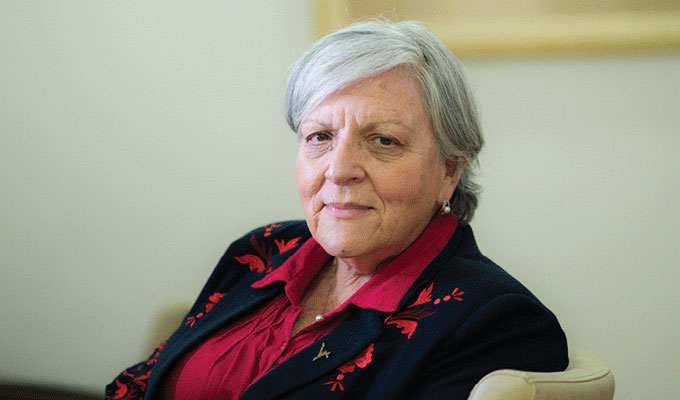
For Dr. Dina Ben Yehuda, one of Israel’s leading hematologists and experts in molecular diagnostics, the future of medicine will depend as much on understanding an individual patient as it does on artificial intelligence, genomics and the growing universe of data now available to physicians.
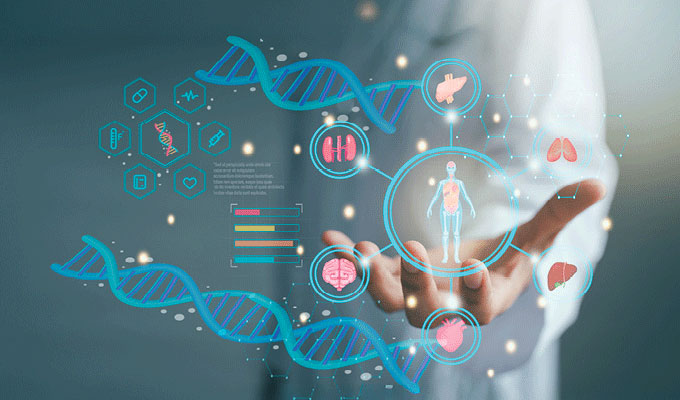
Speaking on the latest episode of Hadassah On Call: New Frontiers in Medicine, Dr. Ben Yehuda describes a rapidly evolving medical landscape in which doctors may soon be able to tailor treatment not simply to a disease, but to the particular biology, environment, microbiome and lifestyle of the person sitting in front of them.
The goal, she explains, is to understand why two patients who appear to have the same cancer can respond completely differently to identical treatment and to use increasingly sophisticated tools to predict those differences before exposing patients to therapies that may fail.
But as medicine becomes more precise, Dr. Ben Yehuda warns that new challenges will emerge around cost, access and ethics.
“We are running forward with the technology, but I think that we are very much behind in two things: first, budget, and the second is ethics,” she says.
She points to pancreatic cancer as one example, explaining that only a handful of patients may carry a specific mutation that makes them eligible for a highly effective targeted therapy, raising difficult questions about testing hundreds of patients and paying enormous sums to treat just a few. At the same time, Dr. Ben Yehuda says technology cannot replace the relationship between a doctor and patient.
“I think that the computer will know how to treat very well, but they will not embrace the patient,” she says.
In the coming decade, she believes precision medicine could move increasingly toward prevention, using a person’s biological and lifestyle data to identify risk before disease develops. But that future, she cautions, will only succeed if ethics and regulation keep pace with science.
“We have to run forward with the research, but we have to run after it with our ethics and regulation,” Ben Yehuda says.
Further Learning:
- A Symbol of Israeli Spirit: Prof. Dina Ben Yehuda Selected for Independence Day Ceremony Honor
- Hadassah Hematologist Dina Ben Yehuda: Healer, Researcher, Mentor and Dean
- Prof. Dina Ben Yehuda, First Woman Dean of Hadassah-Hebrew University Faculty of Medicine
Hadassah On Call: New Frontiers in Medicine is a production of Hadassah, The Women's Zionist Organization of America. Hadassah enhances the health of people around the world through medical education, care and research innovations at the Hadassah Medical Organization. For more information on the latest advances in medicine, please head over to hadassah.org.
This episode includes promotion for Hadassah's 2025 Impact Report
The most powerful stories are stories of transformation. Lifechanging stories.
A devastating diagnosis becomes a doorway to innovation.
A crisis is met with courage.
And a young life is given purpose.
In 2025, Hadassah hospitals treated more than one million patients, performed nearly 52,000 surgeries and was named Israel’s number one hospital for scientific output by Nature, a leading journal. Our medical teams achieved groundbreaking Israeli first — turning what once seemed impossible into reality and changing people's stories in profound ways. Behind every one of these stories is you: our listeners, viewers and donors, who help us make a difference.
Your support makes breakthroughs possible, transforms lives and carries Hadassah’s mission forward — from Israel to communities across the United States and around the world.
Now, you can download Hadassah’s 2025 Impact Report and see what life-changing looks like in action. Visit https://go.hadassah.org/impact25 to discover the stories and see the impact.