For years, 18-year-old Shani dreamed of being able to move freely without the limitations of severe scoliosis. An avid dancer, she loved attending dance classes, but her curved spine often prevented her from performing certain movements.
"Scoliosis limited me at all kinds of moments," she recalled. "For example, I was a regular participant in a dance class, and there were exercises that I couldn't do. My back just didn't let me."
Today, the young woman from Ofakim, Israel, is walking upright and no longer suffering from the pain that once affected her daily life, thanks to a groundbreaking surgery at Hadassah Hospital Ein Kerem.
Shani became the first patient in Israel to undergo spinal surgery using the Medtronic Stealth AXiS Surgical System, an advanced robotic platform that combines artificial intelligence, surgical planning and precise navigation.
The procedure marked a medical milestone for the Hadassah Medical Organization (HMO), but for Shani and her family, it marked something even more meaningful: a new beginning.
Seven Years of Waiting
Shani's journey began when she was just 11 years old.
Her mother first noticed something unusual while touching her daughter's back. "One side near the spine was clearly higher than the other, and her shoulders were asymmetrical," she recalled. "I was terribly frightened; I was afraid it was a tumor."
A medical examination revealed that Shani had scoliosis, a condition involving an abnormal curvature of the spine. Over the following years, Shani underwent physiotherapy, occasionally wore a back brace and attended regular orthopedic appointments. As the curvature complicated her daily activities, she and her mother traveled repeatedly from Ofakim to Be'er Sheva for medical care.
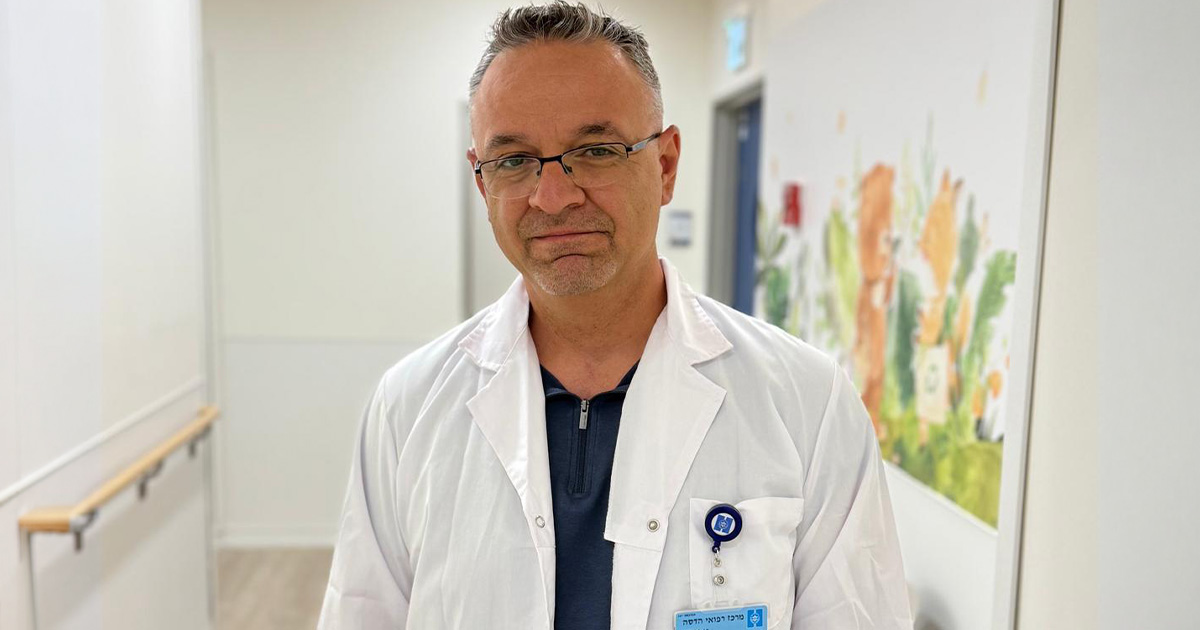
Eventually, they were referred to Dr. Joshua Schroeder, director of spine surgery at HMO.Dr. Schroeder recommended continuing physiotherapy and waiting until Shani's bones were sufficiently developed before considering surgery.
When the time finally came, Shani and her family knew whom they wanted to perform the operation. "We were very serious and hoped that [Dr. Schroeder] would operate on Shani," her mother recalled. "When it happened, it made us very happy and reassured."
A Medical First in Israel
At Hadassah Hospital Ein Kerem, Dr. Schroeder and his surgical team were preparing to use technology that had been employed only a handful of times worldwide.
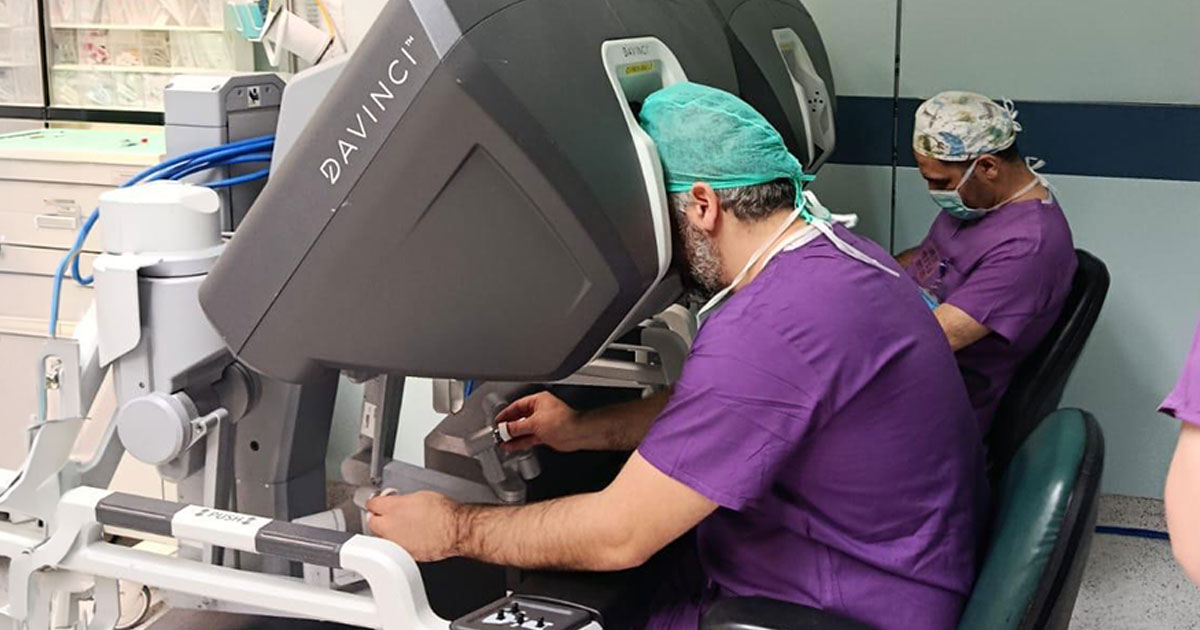
The Medtronic Stealth AXiS Surgical System represents a new generation of robotic technology for spine surgery. Combining artificial intelligence capabilities with advanced surgical planning and navigation, the platform helps surgeons perform complex procedures with greater precision.
To prepare, Dr. Schroeder and members of the team traveled to Switzerland for comprehensive training at Medtronic's training center. There, they practiced using the robotic system in a laboratory designed to simulate operating room conditions.
For Shani's mother, the idea that her daughter would be the first patient in Israel to undergo surgery using the new technology initially raised questions. "When we heard about the surgery with the new robot, we wondered for a moment, because it was the first time in Israel that it would be used," she recalled.
But learning about the team's extensive preparation helped reassure the family.
During the complex operation, which lasted more than five hours, Dr. Schroeder worked alongside senior spine surgeon Dr. Sasha Satanovsky and a multidisciplinary team of anesthesiologists, nurses and other medical professionals.
The advanced robotic system helped the surgeons navigate Shani's spine with precision.
"Our use of the Medtronic robot shows that our spine surgery center is one of the most advanced in the world and that the Hadassah Medical Organization is at the forefront of medical technology," Dr. Schroeder said.
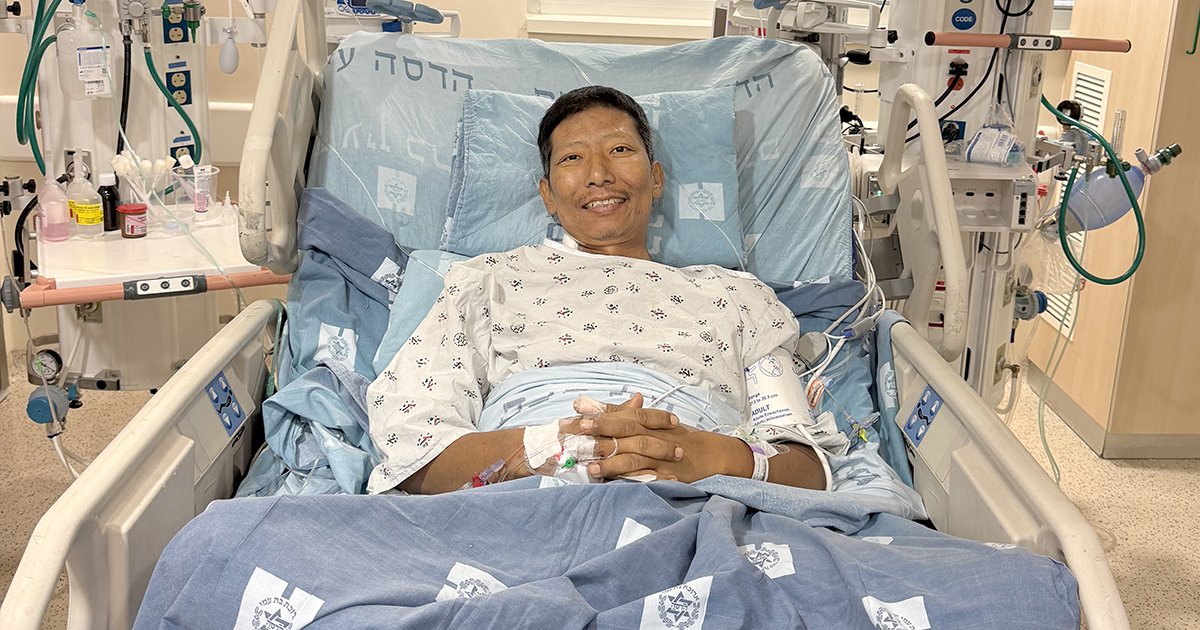
The operation was successful, and less than a week later, Shani was able to return home.
More Than Advanced Technology
While the robot played an important role in Shani's surgery, one of her most vivid memories has nothing to do with technology.
Before the operation, Chen Uri, a member of the medical team responsible for neurological monitoring, held Shani's hand and reassured her.
"She held my hand, talked to me, and gave me a sense of security," Shani recalled. "Thanks to her, I calmed down before the operation."
After the surgery, Uri returned to visit Shani in her hospital room. For Shani, still recovering from anesthesia, that act of kindness was unforgettable."That's the only thing I remember from the surgery and the first thing I told my mother and my friends," she said.
Her mother was equally moved by the care her daughter received. "From the very beginning, the staff at Hadassah received us amazingly well," she said. "We are not alone here, and we have everything we need in every area."
Standing Tall, Looking Ahead
Following the surgery, Shani began physiotherapy and was soon able to stand steadily and walk with her back straight.
Although she still faces a period of strengthening and recovery, her progress has given her family new hope. Shani plans to continue her recovery and follow-up care at a Hadassah facility in Netivot, closer to her family.
Her mother says Shani has been sharing the news of her recovery with relatives, including family members who are now considering seeking care at Hadassah hospitals for their own spinal conditions.
For Dr. Schroeder and his team, Shani's successful operation marks the beginning of a new chapter in advanced spine surgery at HMO. Additional procedures using the robotic system are already being planned.
For Shani, the medical milestone is deeply personal. After seven years of scoliosis, the young woman who once struggled with movements in dance class is now standing tall and looking toward a future with new possibilities.