
.svg)


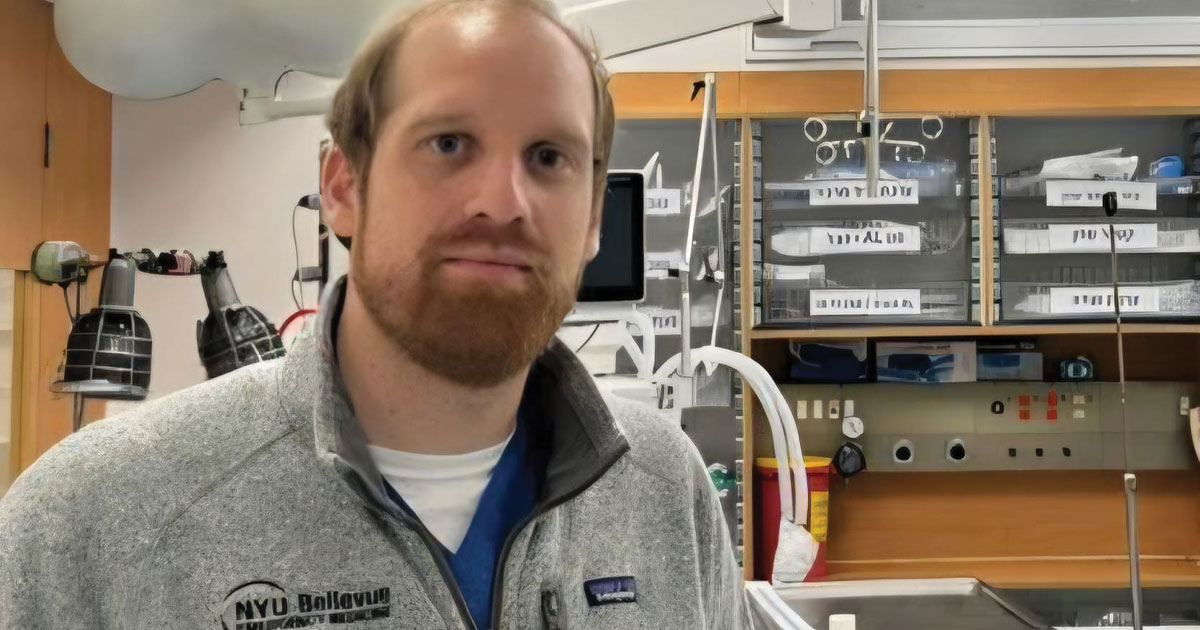
He couldn’t sit still. The moment Dr. Joseph Offenbacher heard about the October 7, 2023, massacre, he decided he would fly to Israel to help. As a board-certified emergency medicine specialist, at a time when wounded were arriving at Hadassah hospitals’ emergency departments and Israeli doctors were joining their army units, he needed to be there.
On October 18, 2023, he left his worried but supportive wife, Rachel, and three young children and flew to Israel to volunteer at the emergency department at Hadassah Hospital Ein Kerem for two weeks, welcomed by Dr. Ahmad Nama, director of emergency medicine there.
As an attending physician in the emergency department of New York University Medical Center and an associate director of the Emergency Medicine Residency Program at NYU/Bellevue, and with a knowledge of Hebrew from his yeshiva education and study in Israel, he quickly integrated in the demanding emergency room. “The nurses and doctors are exceptional,” he said.
On that first visit, Dr. Offenbacher realized what a contribution colleagues from abroad could make, and together with Drs. Ari Greenwald, Betzalel Reich and Binny Hahn, he founded MiluEM, a program in partnership with the Israel Association for Emergency Medicine and the Ministry of Health. The program facilitated the placement of American emergency medicine doctors who wanted to volunteer in Israel. "All these doctors had signed up, but there wasn’t an established way to evaluate and place them in departments," Dr. Offenbacher said. His familiarity with medical schools proved critical in matching doctors with the hospitals that needed them most.
He couldn’t stay away. When his first two-week stay was over, he signed up to come again.
"Taking care of wounded soldiers was by far the most meaningful thing and will always be the most meaningful thing I'll ever do," he said, “and the hardest.”
The volunteering was a step forward in pursuing his lifelong dream of moving to Israel. Born in Brooklyn, Dr. Offenbacher, 37, attended Jewish day school and grew up in a Zionist environment. "In my first-grade class, there was a big poster on the wall of an Israeli flag and Migdal David (Tower of David). And something in me just knew that's where I want to be," he recalled.
In his youth, he studied in a yeshiva in Israel for a year, volunteering as an EMT for Magen David Adom in parallel. "It worked out really well. A whole bunch of us became doctors," he said. He completed his undergraduate studies at Yeshiva University, a postbaccalaureate pre-med track at NYU and went to medical school at SUNY Downstate Health Sciences University, completing his residency at Albert Einstein College of Medicine.
Emergency medicine appealed to him because of its multifaceted, fast-paced atmosphere as well as because of his mentor, the vice chair of education at his school. "He was everything I wanted to be and still aspire to be as a doctor and a person," said Dr. Offenbacher.
In August 2025, Dr. Offenbacher moved to Israel with his family, returning as a staff member in Hadassah Ein Kerem’s emergency department. "Dr. Nama and I really aligned. It became a great fit," he said. " For me, being able to be part of a team like the one he has built was a huge factor."
At Hadassah hospitals’ ERs, the staff has an interdisciplinary approach, resulting in a better assessment of a patient, he says. There have been many cases where interdisciplinary teams of emergency physicians, pediatricians, surgeons, anesthesiologists and others have come together to care for some of the sickest patients. The culture of collaboration and interdisciplinary teamwork and education at Hadassah hospitals makes a big difference in the lives of the patients.
When he's not working in the ER, Dr. Offenbacher, a third-generation doctor, enjoys family time with his wife, a pediatric oncologist and researcher, and their three young sons. “The boys love life here, where they have far more independence than we would give them in Manhattan. And for me? A dream come true to be here.”