
.svg)


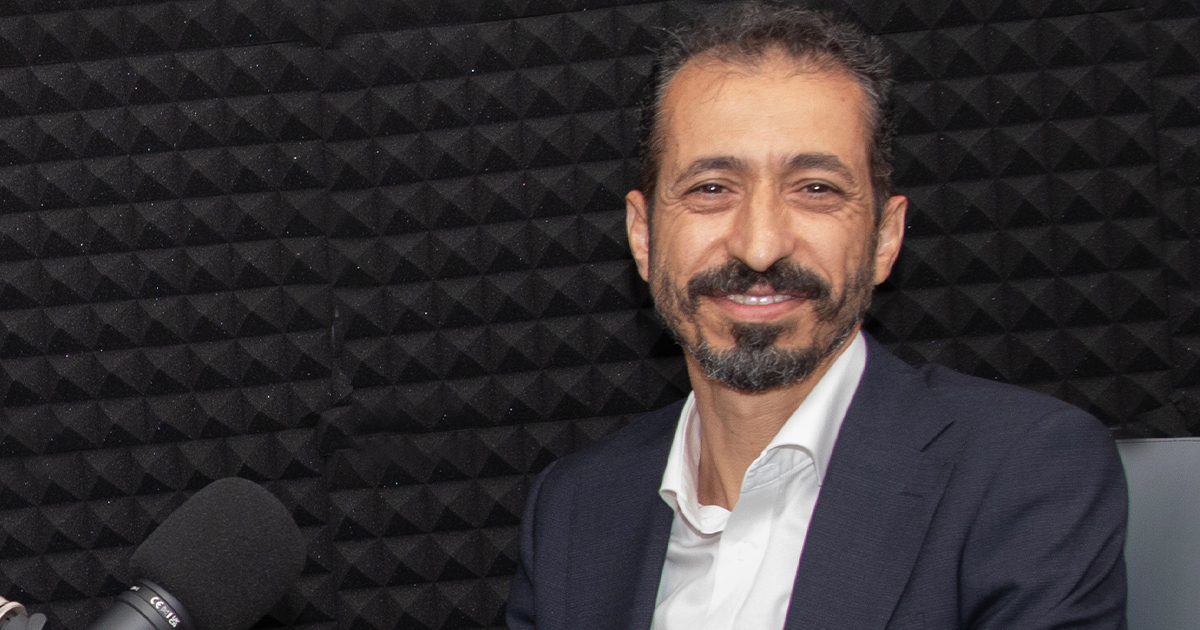
Dr. Abed Khalaileh, director of solid organ transplantation at the Hadassah Medical Organization (HMO), sees transplantation as much more than just a medical procedure. It’s a philosophy. Take the “T,” he said, at the start of the word. It stands for “Together.”
“Together,” he said, “we do everything to support our patients…. Either we are Jewish, Christian, Muslim or Druze, but we are all together. And we have one aim: to give the best healthcare to our patients.”
“We do everything for the human being, not for politics,” he continued.
Hadassah hospitals are like Noah’s Ark, Dr. Khalaileh has been known to say. Just as Noah gathered his wife and children and various animals onto his ark for protection during the global flood, Hadassah hospitals bring together people from every religion and ethnicity to give them a chance of survival. Dr. Khalaileh’s analogy illustrates how Hadassah hospitals truly are a bridge to peace through medicine.
Dr. Khalaileh was a special guest at Hadassah headquarters in lower Manhattan on June 30. During his visit, he hosted an intimate gathering with staff and filmed an episode of the Hadassah On Call podcast, sharing professional and personal details of his career.
This career includes more than 25 years at HMO. Following a stint as an engineer, Dr. Khalaileh turned to medicine. After all, he said, medicine, like engineering, requires complex problem solving, “but those problems are related to human life.”
He completed his residency and PhD at HMO with additional training in France and Turkey. In 2012, Dr. Khalaileh returned to Hadassah and was appointed director of the Kidney Transplantation Service and later director of the Solid Organ Transplantation Unit.
Today, Dr. Khalaileh leads a team in kidney and liver transplantation, as well as pancreatic and liver surgeries for benign and oncological diseases. He emphasized the unique standing of Hadassah hospitals in this field for using a robotic system for kidney transplantation, which creates smaller access holes and incisions and allows for faster recovery, earlier discharge and a lower risk of infection. It also provides greater precision than standard surgery.
It took a long time to get there, but robotic surgery is the future, according to Dr. Khalaileh. “I guess, in 10 years, all transplantation will be done with the robotic system,” he said. There are challenges though. It’s expensive and requires extensive training.
A Surgeon, a Matchmaker and a Friend
When it comes to the human side of transplantation, Dr. Khalaileh said it touches him as both a surgeon and a human being to see a patient on the verge of death and a person willing to give a part of themselves to save another life.
A few years ago, an 18-year-old woman who was suffering from acute liver failure needed a liver transplant from a living donor. Unfortunately, none of her family members were matches. He ultimately got an offer, but the donor liver was not an ideal match. Faced with these challenges, he felt he had no choice but to take the route of a risky surgery to try to save her life.
After a second surgery and treatment for complications, the patient, who had been near death, made a full recovery.
Despite concerns that her medical history might complicate future relationships, the patient made a full recovery and later married, demonstrating how transplantation can restore not only health, but also hope and opportunity.
“That’s not the end of the story,” Dr. Khalaileh said. “They invited me to her marriage. I was there with the family. It was really an exciting moment. For me, it’s not just a patient. She’s part of my life.”
Soon after, the patient's father shared another hope: that his daughter would one day be able to start a family of her own. Following her remarkable recovery and marriage, Dr. Khalaileh continued to support her journey. Several months ago, he received a heartfelt call and a photograph of her newborn baby — yet another powerful reminder of how transplantation can open the door to new beginnings.
The Future of Organ Transplantation
Outside of lifesaving transplants, Dr. Khalaileh is proud of Hadassah hospitals’ groundbreaking research. “Without doing research, we can’t give the best care, we can’t even advance and we can’t see the future,” he said.
He and his team are currently conducting research on liquid biopsies to diagnose organ rejection. Liquid biopsies differ from traditional biopsies because, rather than taking a tissue sample from the transplanted organ, doctors can look for signs of rejection through a small sample of blood. Unique to Hadassah hospitals, this work could revolutionize organ transplantation.
Dr. Khalaileh sums up the lifechanging world of transplantation most appropriately: “Transplantation is a transformation, from bad to good.”