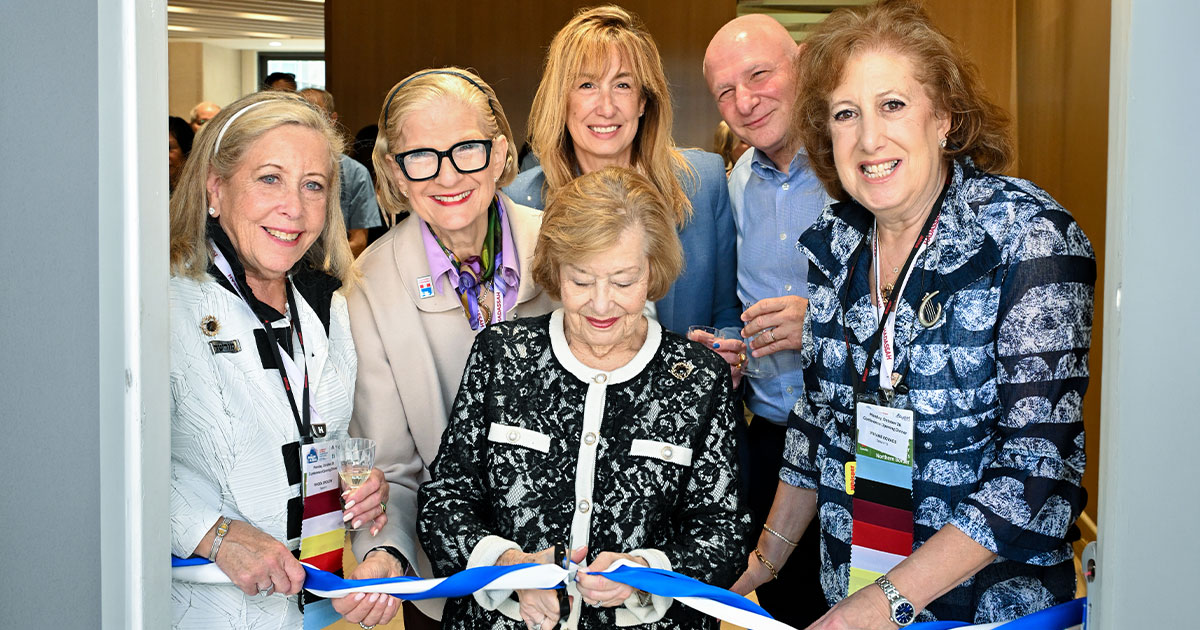
For more than six decades, the iconic Round Building has stood proudly as the centerpiece of Hadassah Hospital Ein Kerem. Now reimagined, the historic building continues to elevate its already exceptional patient care. The updated facility was commemorated with a dedication ceremony during Hadassah’s 2026 national conference this October.
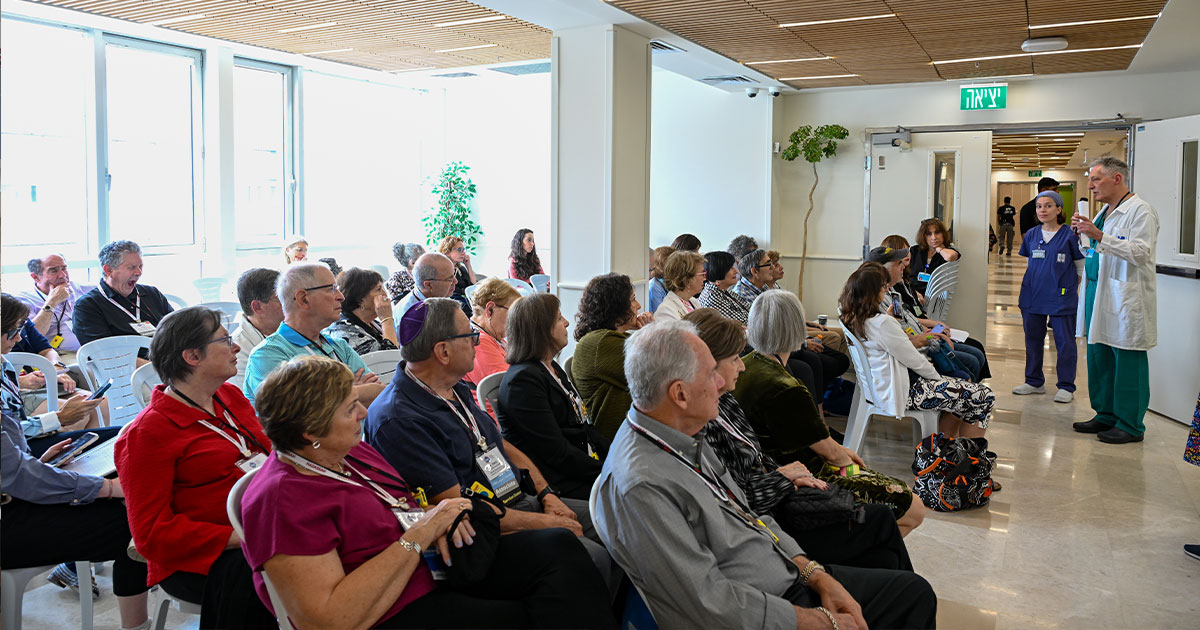
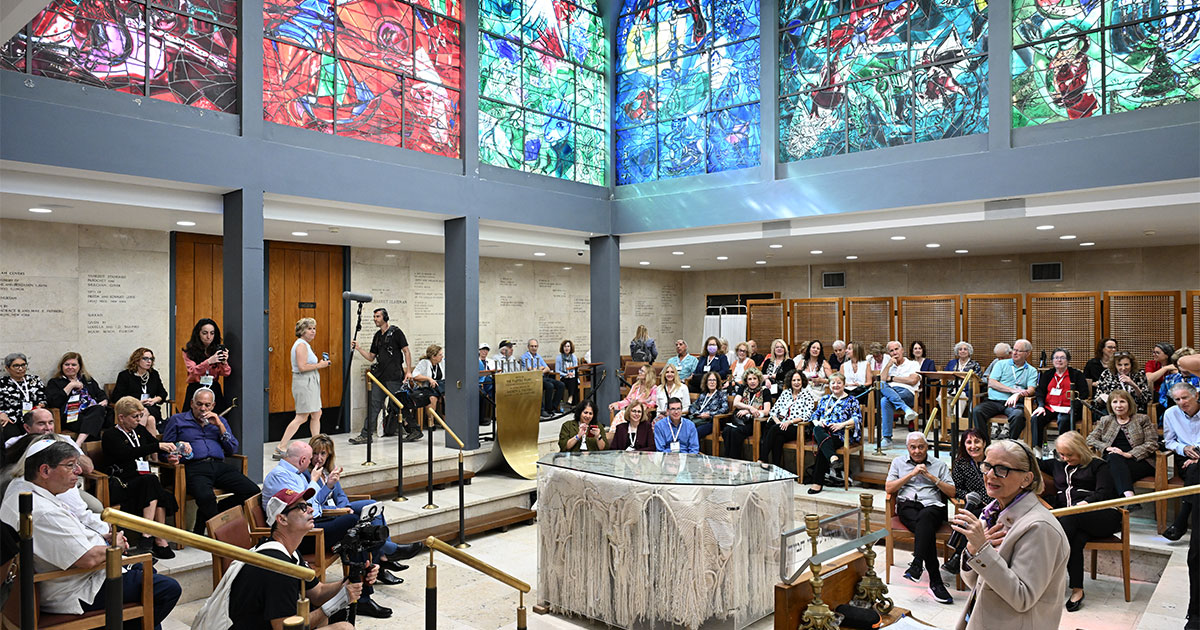
Filling every seat in the Abbell Synagogue, some 100 donors to Hadassah’s 360° of Healing Campaign eagerly awaited the chance to witness how their support evolved from a vision to something tangible, in the form of a modern space that houses Israel’s most cutting-edge medical care.
“Today is much more than the opening of a remarkable facility,” said Hadassah National President Carol Ann Schwartz as she welcomed guests. “We are dedicating ourselves to the future — a future of innovation, a future of healing, discovery and of excellence.”
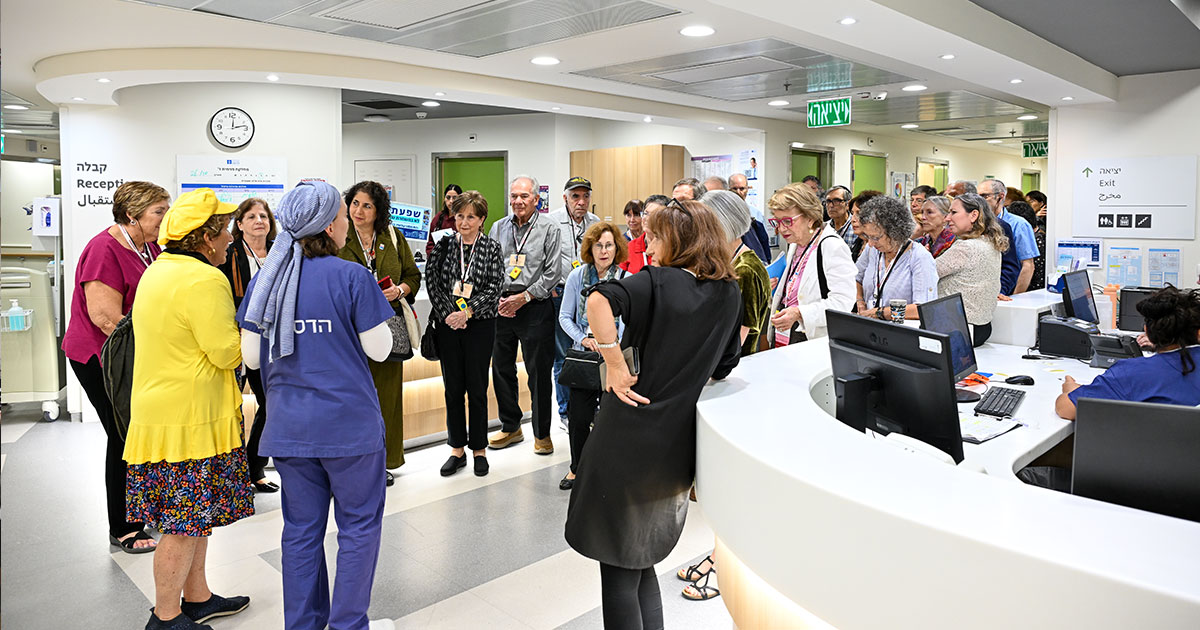
Through patient, doctor and nurse testimonials and tours, donors learned how a new and improved Round Building will have a lifechanging impact on every person who walks through its doors.
“Every patient who will be treated here, every breakthrough that emerges from these hallways, and every life that will be touched, is part of your legacy and how you have made a difference during your lifetime,” Schwartz continued.
Hadassah Medical Organization (HMO) Director General Prof. Yoram Weiss, MD, remarked that the renovation brought the original space up to modern medical standards, where both patients and staff are supported. “In order to provide the best medicine possible, you are required to have infrastructure that is helpful and respects both the people that work there and also the patients,” he said. “And I think this is what we were able to accomplish in the Round Building.”
For critically ill patients, that support will take place in the new medical intensive care unit, in development now under the leadership of Dr. Sigal Sviri. Describing the ICU as a “bridge between a life-threatening situation and the chance to recover,” she recalled how back in 2019, this space was “only a dream. We dreamed about this unit, and now it's becoming a reality.”
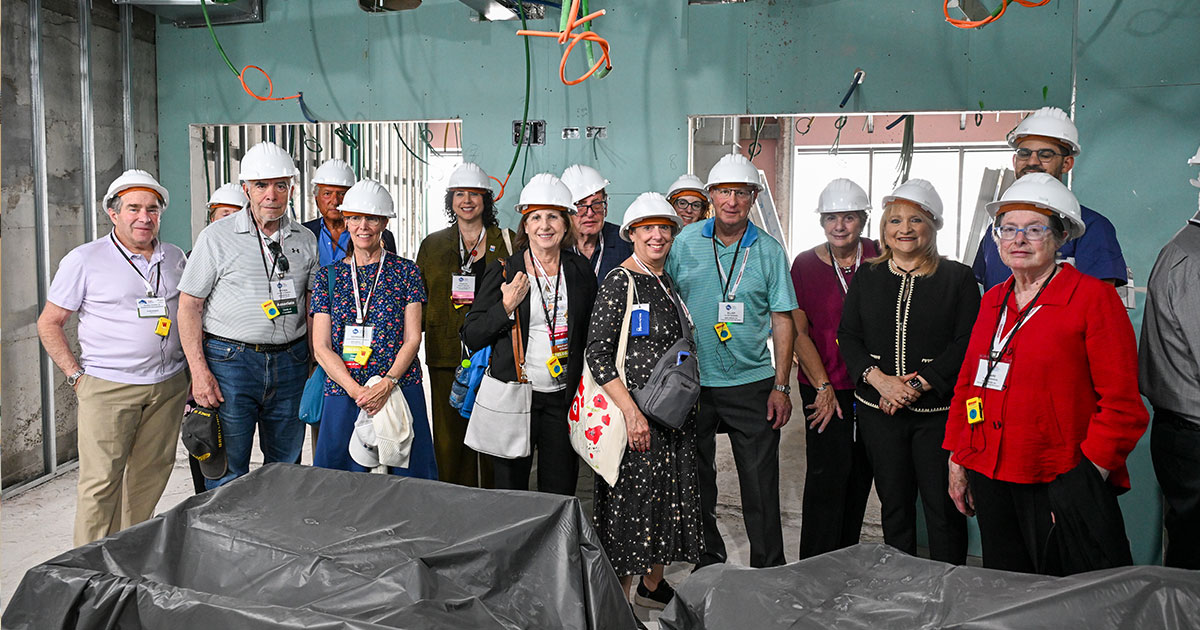
Donning hard hats for safety, donors were given a behind-the-scenes peek at the unit while still under construction. “Nobody plans to end up in intensive care,” said Dr. Sviri. “It usually happens without warning: a severe infection, an unexpected breathing problem or a complication of an illness someone has lived with for years. In a moment, an ordinary day becomes a medical emergency.”
Take Yona Zioni, a former police officer living with a chronic hematological illness that significantly weakens his immune system. During Covid, Zioni was admitted with severe Covid pneumonia, deteriorating quickly and needing sedation and mechanical ventilation in the ICU. As his organs began to fail, he required prolonged, complex life support.
With his Hadassah medical team fighting for his survival for weeks, Zioni slowly began to recover. Covid had left his lungs severely damaged, and it took more than a year to wean him off the ventilator. And his journey still wasn’t quite over; he then faced a challenging road of rehabilitation to rebuild strength and regain function.
“When people picture an ICU, they usually imagine machines, monitors, alarms and ventilators. Those matter, but the real heart of an ICU is its people,” said Dr. Sviri as she acknowledged the critical roles of everyone from the nurse to the physician to the physiotherapist to the dietitian to the team member who honestly and compassionately explains to frightened family members what is happening.
At the new Internal Medicine D Department, donors learned about advancements in interventional radiology (IR), minimally invasive, image-guided treatment using small instruments. Department head Dr. Allan Bloom described a new state-of-the-art IR center that will hold 14 intake and recovery beds for adults and children and new equipment, including the FlexArm, a robotic arm that rotates around the patient by 360 degrees and reduces radiation exposure by 60 percent.
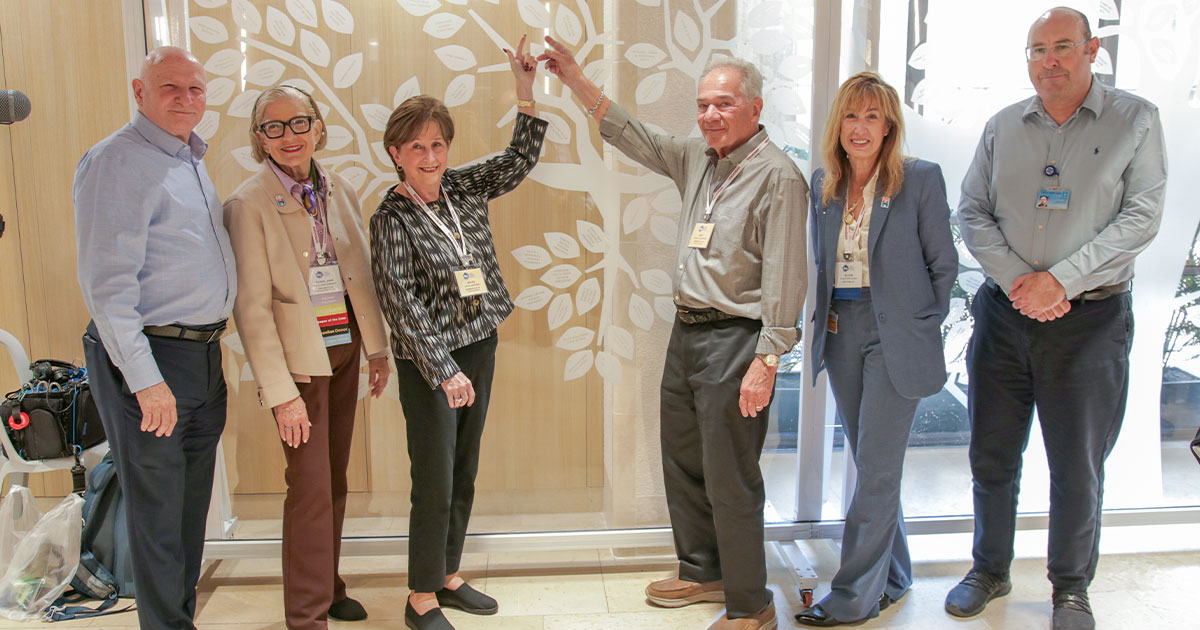
Following a ribbon-cutting at the site of the new promenade, Miki Schulman, chair of the 360° Campaign, thanked donors for making the Round Building transformation possible and recognized them with individual leaves bearing their names on the glass-etched Tree of Healing.
“We've given many gifts to support Hadassah's projects, particularly at HMO, and every time we've given, I think we've gotten a lot more back because we're so proud of being able to be in the position in our small way to make a difference to our patients and lives we touch,” said Joyce Rabin of the gift she and husband Jeff made to the 360° Campaign. “We hope we can continue to do this for many more years.”
Schulman, herself, had known about the transformative work of Hadassah hospitals long before she took on the 360° Campaign, having been inspired by her mother-in-law, Lillian Schulman, of blessed memory, who had been instrumental in fundraising efforts to build Hadassah Ein Kerem. Following her first trip to Israel to see the hospital, Lillian instilled in Miki a passion for and commitment to quality healthcare for the people of Jerusalem and Israel.
“So when I was presented with the challenge of renovating this building, it just seemed natural that I would be able to continue her legacy and create this impressive space,” Schulman said.
Schulman added, “I hope that, in particular, our Hadassah Medical Organization staff find it easier, more pleasant and successful in treating patients in this new environment.”
Viviane Kovacs, who worked closely with Schulman on the campaign before becoming Hadassah’s current national treasurer, told donors, “Your gifts are so much more than just donations. They represent your belief in Hadassah's mission, your commitment to healing, your compassion to others and your faith in the power of medicine to be a life changer.”