
.svg)


Judith’s sons were serving in Gaza for hundreds of days. Suddenly, Grandma Judy had to help with her own children, with grandchildren and daughters-in-law. Fifteen family members counted on her every day for help. "The stress we are under is difficult to explain," she said. “Of course, I couldn’t make my own health a priority. I was happy to grab something to eat in between carpools. I needed comfort food. I started to skip exercise. This was a two-year war, not a short interval that I could rationalize ignoring my own needs. Stress makes it all worse, of course.”
Grandma Judy wasn’t unusual. According to IDF statistics, as of January 2024, some 295,000 people had been called up for reserve duty, of whom about 115,000 are fathers.
In a community study by the Linda Joy Pollin Cardiovascular Wellness Center for Women at Hadassah Hospital Ein Kerem, the loving care being provided by grandmothers at risk themselves was generating harmful stress. One grandma reported that she was providing support for 62 family members.
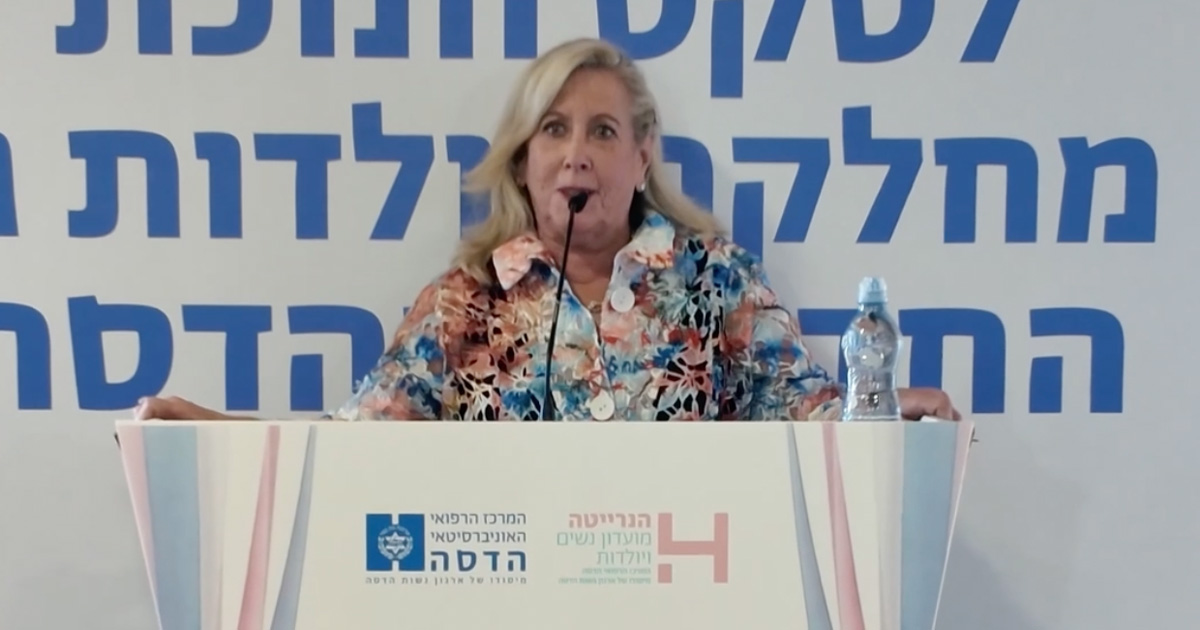
"This is a nationwide problem of large numbers of women who are at critical junctures in their health who are not caring for themselves effectively, and we will see the ramifications for years to come," said Dr. Donna Zfat-Zwas, head of the center.
Who was providing support for Judy and the other women?
Hadassah was.
In a first-ever pilot study, 15 women aged 55–75, who are at risk of cardiovascular diseases and whose children served in the Israeli military in the two years of war, participated in a program offering practical tools for a healthy lifestyle, combining emotional regulation and behavioral intervention under extreme stress.
By the end of the program, all the women lost weight, and their blood pressure went down as did their waist circumference, an indicator of cardiovascular risk, according to Lori Sloman, a nurse at the center who facilitated the group.
"Taking care of your health is key," said Sloman. "Women are caregivers, and the first person who suffers is the woman herself. The population who participated in the program is very giving. They are all grounded in Zionism and wanted to do what they could for their families and for their country."
Grandma Judy felt the program was a life raft in a turbulent sea. "This program had a tremendous impact on me. There are certain things that were drilled into my head I hope I'll never lose," she said. "Everybody wants to be healthy and be able to get through this stressful time without having a nervous breakdown.”
Among the subjects they tackled in the 14 sessions, participants discussed nutrition, physical activity, sleep, the power of positivity, mindfulness and problem-solving skills.
"I wanted to do everything I could to be healthy and take care of myself," said Rivka, a participant in the program who also wanted to do everything she could for her children and grandchildren. For her, the sessions offered "a lot of reinforcement for different issues that I should be aware of: eating healthy, exercising and social interactions. Most importantly, it helped me deal with the daily stress.”
Psychologist Elisheva Leiter, who headed the program, said, "Women naturally support one another incredibly. Meeting in a focused group, even during such difficult times, gave them the opportunity to both provide and receive optimism and strength from each other."
Grandma Judy put it like this: "Everyone could understand what everybody else was going through. We shared ideas not just about healthy food but also about how to get through the day, the week, the month and the year. It was so fantastic to have Hadassah reach out to us. Just knowing that there’s an organization that cares about us at-risk caregivers and wants us to get through this difficult time as healthily as possible, that’s a great feeling."