
.svg)


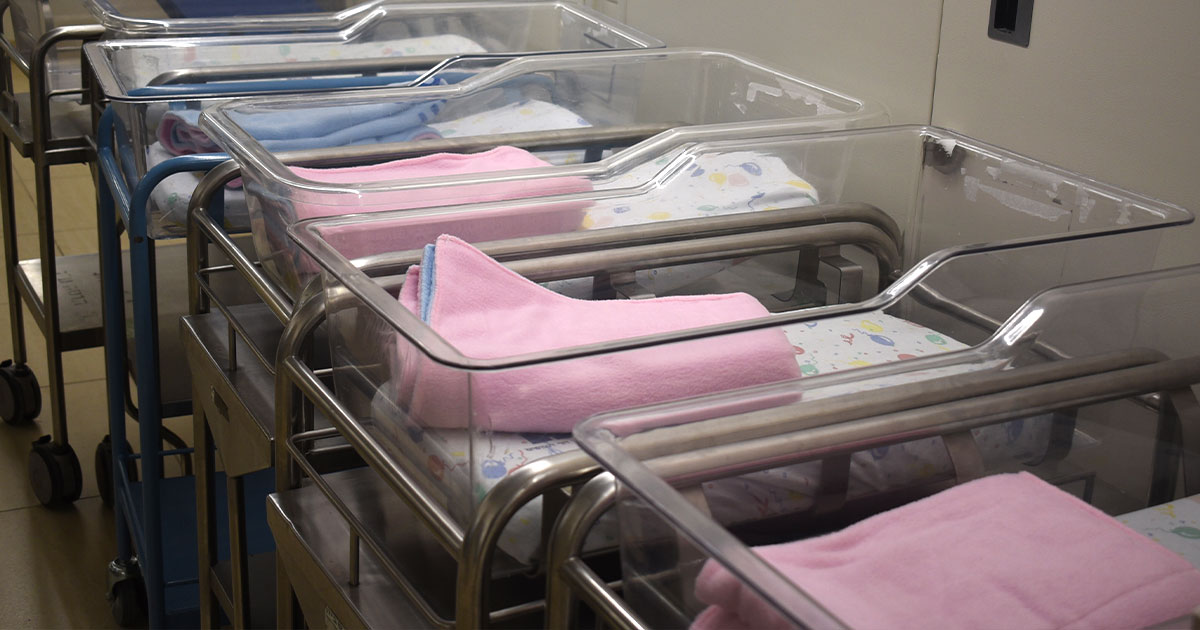
Should the midwife and obstetrician on duty recommend a cesarean section or go ahead with a regular birth? It’s an important decision for a woman’s recovery and sometimes for her ability to have more children.
Does a certain patient need extra supervision even though on the surface nothing seems to indicate complications?
Might the mother or baby develop irregular heart rhythms?
The doctors and midwives rely on monitors, as well as their vast experience and educated judgment. Now they have an additional tool: AI — a million information points comparing a specific patient with tens of thousands of women who have given birth.
AI now occupies space on the wall monitors and can alert the staff that they may need backup staff and/or an operating room.
Program co-director Prof. Michal Lipschuetz points to her computer monitor to show a practical application of this technology for just such a case.
A 24-year-old woman, let’s call her Miriam, is pregnant for the first time. Miriam came to Hadassah hospitals when her contractions began. From the moment she entered, Hadassah Medical Organization (HMO) staff began comparing Miriam’s particular parameters with data from tens of thousands of other pregnant women, provided by AI.
Miriam’s medical history and previous examinations indicated that she was likely to need a cesarean section. In the hospital, her contractions increased in intensity, and the information from her monitor as well as the fetal heartbeat confirmed that a C-section would be imminent.
On an overhead monitor that listed all the women in the 12 delivery rooms, Miriam’s name was marked to show that special attention was needed. The midwives, doctors and nurses prepared for a possible surgery.
But then, Miriam’s cervix dilated, and the fetal heart rate improved. The artificial information beeped an important change. Now, according to the artificial intelligence, a woman with Miriam’s markers had a 75 percent chance of having a regular vaginal birth.
That was important information and reassuring to the staff members who also judged that a regular delivery was possible.
Central monitors capable of showing AI analyses are already in place at the Rady Mother and Child Center at Hadassah Hospital Mount Scopus. In addition to the heart rates of moms and in-utero babies, AI data will help the staff make decisions. Senior midwives will be able to call in help for unplanned surgeries and unpredictable conditions.
Dr. Yishai Sompolinsky, program co-director and head of Hadassah Mount Scopus labor and delivery rooms, revealed the new capabilities to OBGYN staff on both HMO campuses on a January 7 webinar.
The team, which also includes senior researcher Prof. Simcha Yagel, is currently recruiting 400 prospective moms for the study to determine how the AI input impacts their decision-making.
“We hope we will make even better choices: who will need an unplanned cesarean and who can avoid it,” says Lipschuetz. “This is just one component of our whole vision of seeing the delivery ward taking steps to being more AI focused.”
Cesarean rates vary enormously by country. In Brazil, over 50 percent of births are by C-section. In the US, every third delivery is by C-section. Israel, with the highest birthrate among developed countries, has a low 15-20 percent of C-sections. Will that rate dip even lower, with HMO physicians now capturing the power of artificial intelligence? Time will tell. With AI, the labor and delivery team is better equipped to anticipate and respond to the unexpected.