February 28. Hadassah Hospital Ein Kerem needs a new underground ward, fast. Iranian ballistic missiles are in the sky. Who will install the oxygen lines, showerheads and ventilation systems needed to keep patients safe?
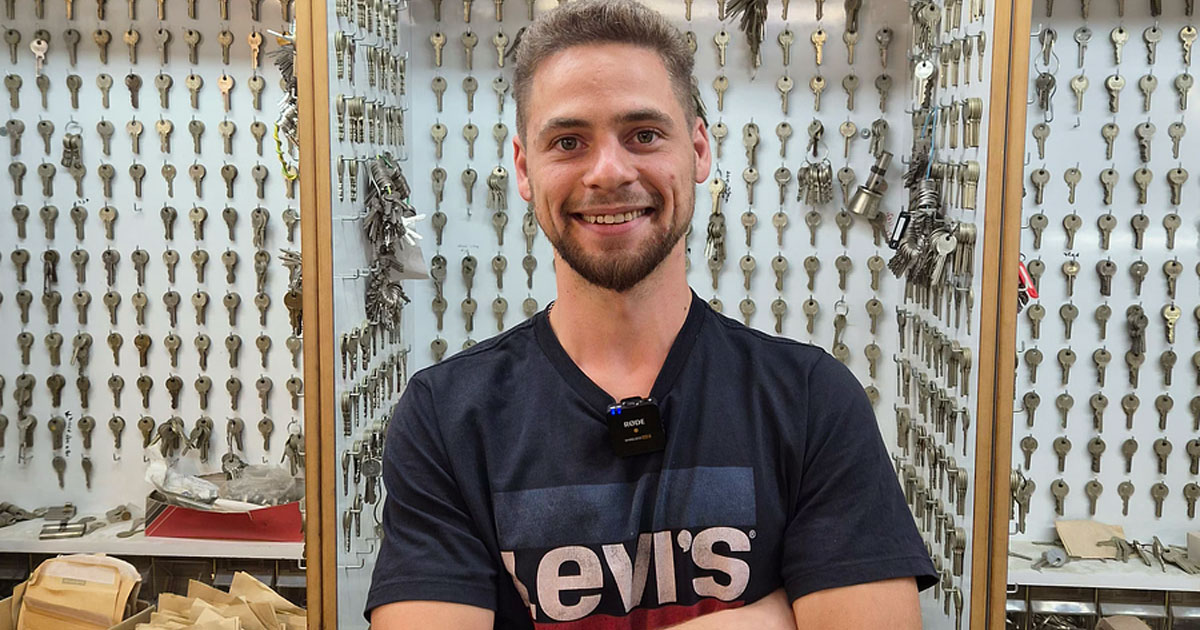
Meet Yakov Moser, 27, a member of the Hadassah Medical Organization (HMO) construction department who volunteered to help prepare fortified spaces so hospital departments could move underground.
Moser wasn't required to come to work that day, but he showed up anyway.
"I could see the missiles being intercepted above my head," he said, recalling his commute home that night to the community in the Judean Mountains where he lives.
Within hours, the Neonatal Intensive Care Unit (NICU) and Maternity Department were fully equipped in fortified areas.
Working alongside his team, Moser also helped build a new ward in an underground parking lot at Hadassah Hospital Ein Kerem, installing infrastructure for medical gases, beds, IV stands, heating, ventilation, bathrooms and showers.
"I never dealt with these types of things, but you learn as you go," he said.
Even on routine days, the hospital is a dynamic, fast-paced environment.
"It's a hospital. Everything is under pressure and urgent. Everything has to happen immediately."
But Moser loves this kind of work.
Hadassah hospitals have thousands of doors. If one gets stuck, Moser may be called to intervene, installing a new lock in as little as 10 minutes.
"You don't always see it, but in a hospital sometimes even opening a door can save lives," he said. "I see in my work added value. In hospitals, people mostly see the doctors and nurses. But the technical side is no less important. Without it, the medical aspect wouldn't be working as it should. The job is much bigger than us."
Moser was born in Jerusalem and grew up in an ultra-Orthodox household, the seventh of 10 children born to English-speaking parents. His father is from Philadelphia and his mother, Tamara, is from Edmonton, Canada. His maternal great-grandmother, Nassa Milner, was a member of Hadassah-WIZO (the Women's International Zionist Organization) in Canada and strongly supported its initiatives.
His mother also works at Hadassah Hospital Ein Kerem as a medical coder.
"After I had my children, I was looking to rejoin the workforce and completed a medical coding course for ultra-Orthodox women," Tamara said.
When the COVID-19 pandemic began, she learned of open positions at HMO, applied and has worked at the hospital ever since.
"The office has a nice energy and camaraderie," Tamara said. She and Yakov occasionally have lunch together, "but he's usually too busy," she added. "At Hadassah, it's not just a job, you're doing so much more. Yakov is very committed and determined. When he has a goal in mind, he'll reach it."
A hospital handyman by day, Moser is also a civil engineering student, balancing his studies with a demanding work schedule.
"I juggle everything with a smile," he said. "I really enjoy working at Hadassah and derive a huge sense of purpose from this job. Here I feel that I'm needed and help save lives."