
.svg)


October 4, 2025. 12 pm. Shostka train station, northeastern Ukraine. The Russian border is 25 miles away. People are boarding the Kiev express. Two drones hit — one lands on the station, the second explodes on the train, killing several people and wounding dozens.
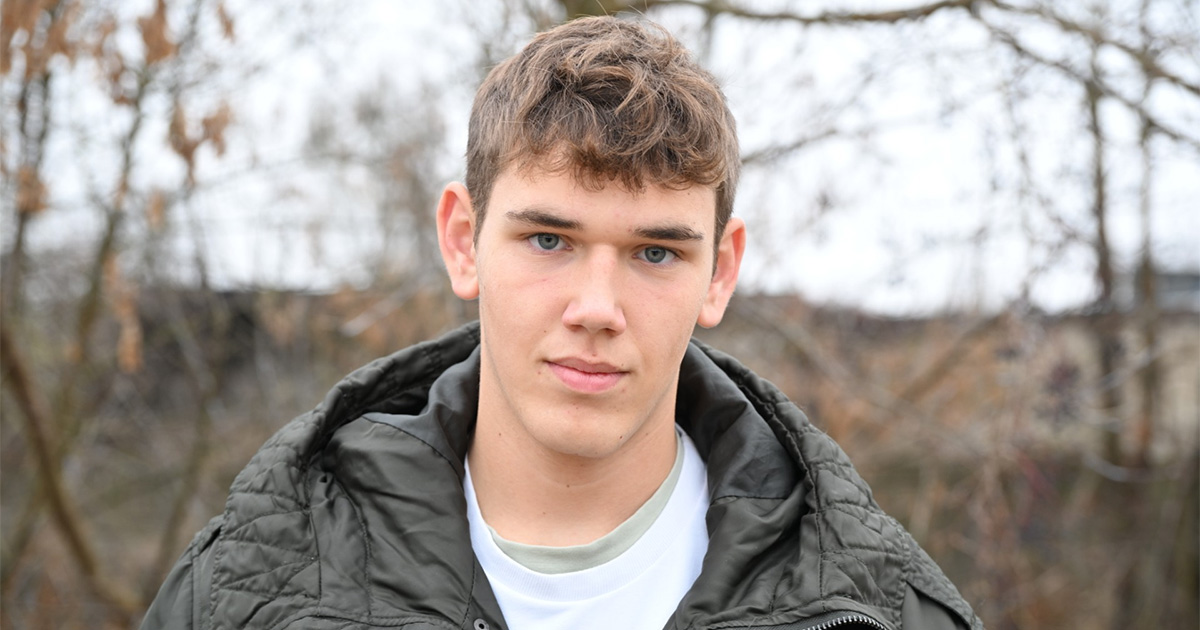
Hadassah Neurim Youth Village student Matvei Moroz, 17, sits on a bus, impassively relating the story of Shostka. His story.
It's 7:30 am as the vehicle crosses foggy central Poland, bound for Kielce and its 1946 blood libel and subsequent pogrom in which at least 42 Holocaust survivors were murdered. The expert Israeli tour guides will soon tell the Kielce story to the 150 students on this Hadassah-sponsored trip to Poland. They will share the story in the local Jewish cemetery — the only tangible reminder of what was.
Matvei wants to tell his own story. He grew up in Shostka, a city of 80,000 people with only a small Jewish community, “most of them in their seventies.” When he was 13, Matvei’s mother decided to send him to a religious Jewish boarding school in Kiev, with prayers in the Great Choral Synagogue. That was in October 2021. Just four months later, one of the counselors woke him, telling him to quickly pack a bag because war with Russia had broken out.
“Hopefully it's just for a few days,” the counselor said.
Matvei arrived at a camp for displaced Jewish Ukrainians, where he was reunited with his mother six weeks later. She told him it would be best for him to leave the country, though she would remain with her parents back in Shostka.
"I was asked by the authorities if I wanted to move to Germany or Israel,” Matvei recalls. After several weeks in Poland and Hungary, he moved to Israel and to Hadassah Neurim.
The fog lifts a little, but the bus continues cutting through wintry Poland. Matvei scrolls through photos and videos on his phone.
"This is my great-uncle and his son on their farm about three miles from the Russian border.” The image shows a typical Ukrainian rural scene, with a rundown shed and a tractor in the background. “There are only about three people left in this village. My great-uncle is stubborn — he won’t leave.”
Perhaps surprisingly, Shostka’s population has grown since the start of the war. Matvei explains that people from nearby villages relocated there.
Hadassah Neurim is a peaceful haven for Matvei and dozens of young Ukrainian refugees. “But the thunder in Israel is much louder than back home, and when I hear it in the village I panic. It takes me back to Shostka.”
He has returned to Shostka numerous times in the past few years to be with his mother and grandparents, but it is not easy for him to be there, nor to leave them on his return to Israel.
He scrolls through videos he and friends filmed of burning buildings, destroyed apartments and armed drones flying overhead toward larger cities.
"Even in Shostka there can be as many as 40 explosive devices landing in a single day,” he says. “I miss the beauty and the weather back home, but next year I will draft into the Israel Defense Forces. Maybe my mom will make Aliyah, but for now she is with her parents.
“True, my story is tough, but there are others in Hadassah Neurim with maybe more harrowing experiences.”
The bus pulls into the cemetery parking area. Matvei looks up thoughtfully.
“Maybe the reason I came on this trip was because of my great-grandmother. She was Jewish. She served in the Russian army in World War II. I need to learn her story.”
Learn more about Hadassah’s Youth Villages in Israel.